Quiet Felt, Loud Clock: A Dawn-Shift Etiquette Guide for US Live-Dealer Tables
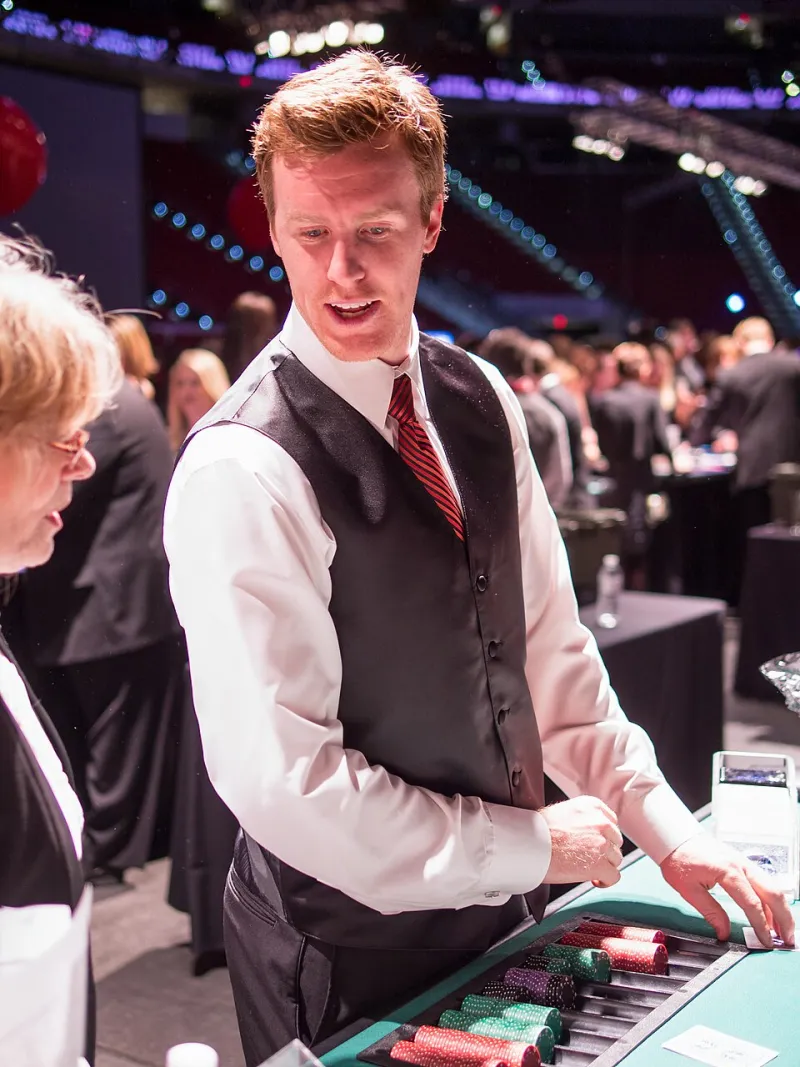
Photo: Douglas Muth from Philadelphia, PA, USA, CC BY-SA 2.0, via Wikimedia Commons
At 4:12 a.m. Eastern on a Tuesday, the live-dealer lobby can feel like a hotel bar after last call: lights on, chairs straight, one person behind the counter. That is not a warning. It is a different kind of table. The 24/7 label on ePlay24 and every other live casino means the doors do not close. It does not mean the room is equally social at every hour. If you are the only American at the table, or the only player, period, the etiquette changes. Here is how I would handle it.
First, Read the Room Before You Sit
A quiet table is not automatically a good table. Before you buy in, watch the pace for a minute. Is the dealer moving briskly or waiting on one player to decide? Are there side bets slowing everything down? Is the chat box active, or is it a ghost town? A single-player table can feel like a private lesson, which is great if you want to ask questions and terrible if you want to disappear into the rhythm of a full table.
Check the limits, too. Off-peak hours sometimes bring different table minimums, and a table that looks empty may have a higher minimum than the one next to it. If you want low-pressure practice, find a lower-limit table and accept that the dealer may be more conversational because there is nobody else to serve. If you want anonymity, a busier table is usually better, even at 4 a.m.
The Time-Zone Handshake
Dealers are often working from studios in Europe, Latin America, or Asia. When they say good morning, they mean their morning, not yours. Do not correct them. A neutral greeting works fine: hello, good to be here, thanks for dealing. If the conversation flows, you can ask what time it is where they are, but treat it as small talk, not a trivia question. Never ask why they are awake. They are at work. You are the one playing at an odd hour.
This is the real handshake: you acknowledge that you are in their workspace, on their clock, and you keep your side of the table polite. That means no complaining about the hour, no jokes about them being up late, and no assuming that a quiet table means the dealer is bored and wants to hear your life story.
When to Tip, and How Much
Tipping is personal, but live-dealer tables have norms. A dollar or two after a good hand is common at low stakes. Some players tip at the end of a session instead. Both are fine. The awkward move is tipping every single hand like you are trying to buy conversation, or not tipping at all after a long session where the dealer has been patient with you.
Use the tip button the way you would use cash at a physical table: deliberately, not as a performance. If you are playing alone, a small tip after a run of good hands is a clean gesture. If the dealer thanks you, let it end there. You do not need to explain your tipping philosophy. Nobody asked.
Small Talk Without Forcing It
Read the cues. Short answers mean the dealer is done chatting. One-word replies are not rude; they are a signal. Silence at a live table is normal, especially at 4 a.m. You can compliment the pace of the game or the clarity of the dealer's calls. Avoid comments about appearance, and avoid personal questions about family, money, or why they chose the job.
If you are the only player, you will get more attention than you would at a full table. That can be nice. It can also speed up your decisions, because there is no social buffer between hands. Decide before you sit down whether you want a chatty table or a quiet one, and pick accordingly.
The Solo-Table Trap
A quiet table can quietly speed you up. With no other players, every hand ends and comes back to you. That rhythm can turn a 45-minute session into a 90-minute session before you notice. Set a hand count or a time limit before you buy in. Put a phone alarm face-up next to you. If you hit the limit, log off even if you are ahead. Especially if you are ahead.
Do not mistake availability for invitation. The casino being open 24/7 does not mean you should play for 24/7. The table is there. You do not have to be.
A Dawn Checklist for US Players
- Pick the table by pace and limit, not by how empty it looks.
- Greet the dealer neutrally. Skip the time-zone commentary unless they open the door.
- Decide your tip plan before the first hand, not after a big win.
- Set a session budget and a time limit, and put the alarm where you can see it.
- Keep chat light. Short answers mean stop.
- Take a break after a cold run instead of chasing it alone at an empty table.
- Log off when you hit your limit. The felt will still be there tomorrow.
The 4 a.m. table can be the most relaxed room in the casino. It can also be the easiest place to forget that you are the only one keeping score. Treat the dealer like a person at work, treat the quiet like a feature rather than a prompt, and the handshake takes care of itself.